Token Tax Traps: The Hidden Value Drain
Learn how buy and sell taxes work, when token fees become dangerous, and how to recognize tax rules that can erase your returns.
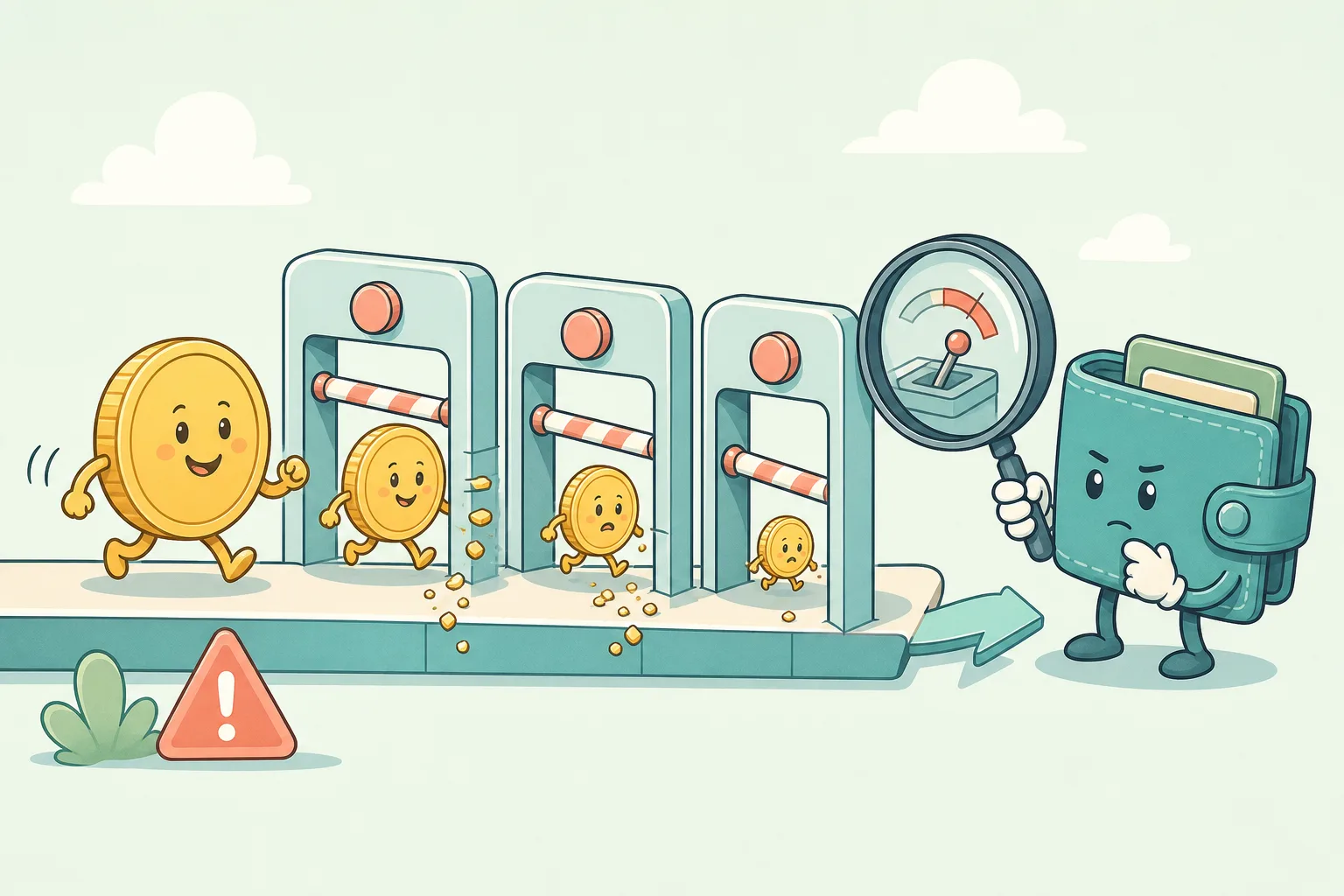
What is a token tax?
Some tokens deduct a fee whenever they are bought, sold, or transferred. The project may describe the fee as funding liquidity, marketing, rewards, or development.
For example, if you spend $1,000 on a token with a 10% buy tax, only about $900 of value reaches you before other trading costs.
Buy tax vs. sell tax
Buy tax
The contract deducts a portion of the tokens or value when you enter the position.
Sell tax
The contract deducts a portion of the value when you exit. A high sell tax is especially dangerous because it makes leaving the position expensive.
VaultScope’s risk threshold
VaultScope flags buy or sell taxes above 10% as high tax. That does not mean every lower fee is safe or every higher fee is automatically malicious. It means the fee is large enough to materially change the trade.
| Range | Practical interpretation |
|---|---|
| 0-3% | Common for some fee-based tokens |
| 3-10% | Expensive; understand the reason and destination |
| Above 10% | High risk; the fee can erase normal returns |
Common tax traps
1. Marketing fee with no transparency
The project claims fees support growth, but the receiving wallet and spending are not disclosed.
2. Tax increases over time
The token launches with a low tax, then the owner raises the sell tax after users have bought in.
3. Hidden anti-whale fee
The displayed tax looks low, but large sells trigger a much higher fee or fail entirely.
4. Privileged fee exemptions
Ordinary holders pay a high tax while project-controlled wallets can sell with little or no fee.
Why high taxes damage a token
- Traders need a much larger price increase just to break even.
- High sell costs reduce healthy trading activity.
- Thin activity makes price discovery and liquidity worse.
- Privileged wallets may gain an unfair exit advantage.
How to identify a tax trap
- Check the quoted minimum received. Compare the expected output with the input before signing.
- Inspect the contract. Look for adjustable fee variables, exemptions, and owner-only controls.
- Review recent trades. Large unexplained losses on sells are a warning sign.
- Ask where the fees go. Transparent projects should disclose receiving wallets and spending.
- Use a small test trade. Test both buying and selling before increasing exposure.
What VaultScope can help with
VaultScope’s token check can show:
- Buy-tax rate
- Sell-tax rate
- Whether either rate crosses the high-tax threshold
- Other related token risks, such as honeypot behavior or blacklist controls
The practical rule: a token price can rise while your position still loses money. Always calculate the cost of getting out.