Understanding Token Approvals: Protect Your Assets
Learn how Web3 token approvals work, why unlimited allowances are risky, and how to reduce the chance of a wallet drain.
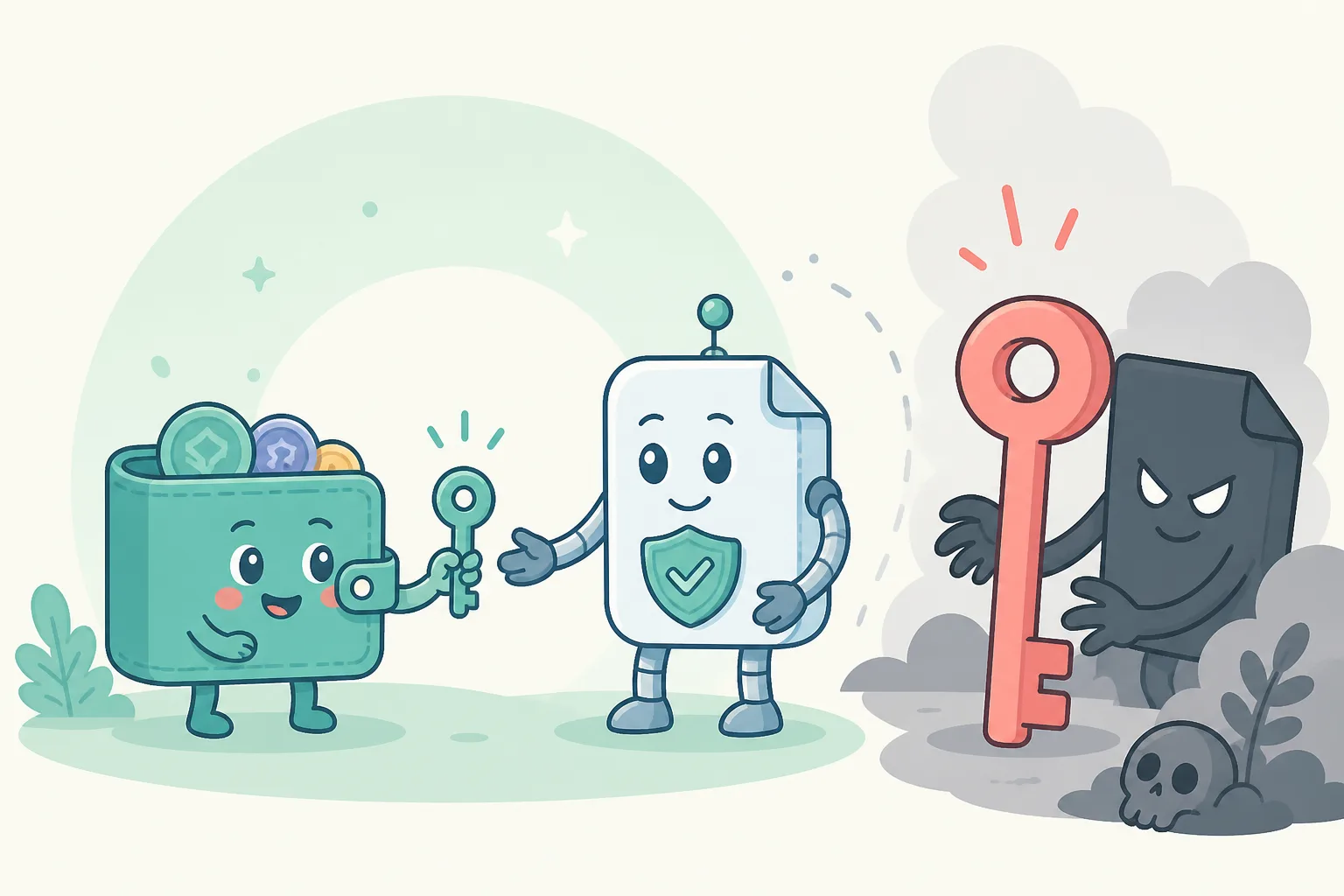
What is a token approval?
When you swap USDT on a DEX or deposit a token into a DeFi protocol, the smart contract needs permission to move that token from your wallet. An approval is the on-chain instruction that grants this permission.
The important detail is that an approval is separate from the transaction that uses it. Your swap may be finished, but the approval can remain active until you revoke it or replace it with a lower allowance.
Why can approvals be risky?
Scenario 1: Unlimited approval to a malicious contract
A phishing site asks you to approve a token before claiming a reward or making a swap. If the contract is malicious and the allowance is unlimited, it may transfer all of that token from your wallet.
Scenario 2: A trusted contract is compromised
Even a legitimate protocol can be attacked. If an exploited contract can use an old allowance, users who approved it in the past may still be exposed.
Scenario 3: You forget an old approval
Wallets accumulate permissions over time. An approval for a project you used once can remain open long after you stop paying attention to it.
How VaultScope classifies approval risk
| Risk level | Signal | Suggested action |
|---|---|---|
| Critical | Unlimited approval to a known malicious address | Revoke immediately |
| High | Unlimited approval to an unverified contract | Review and revoke unless you still need it |
| Medium | Unlimited approval to a verified contract, or a large limited allowance | Check regularly |
| Low | Limited allowance with a clear purpose | Monitor as needed |
Verification is not a guarantee of safety. It only means the contract source code is available for inspection.
Limited approval vs. unlimited approval
A limited approval caps how much a contract can transfer. If you approve exactly 100 USDC, the contract cannot take 101 USDC through that allowance.
An unlimited approval is convenient because you do not need to approve again for future transactions. The tradeoff is that the contract may be able to move your entire balance of that token.
How to protect yourself
- Approve only the contract you are using. Check the domain and contract address before signing.
- Prefer a limited amount. Set the allowance close to the amount required for the transaction.
- Review approvals regularly. Remove permissions for projects you no longer use.
- Treat unexpected approval requests as suspicious. Airdrops, support messages, and urgent upgrade notices are common phishing lures.
- Separate valuable assets. Keep long-term holdings away from wallets used for frequent DeFi activity.
What VaultScope can help with
- Identify unlimited and suspicious token approvals
- Highlight risky or unfamiliar spender contracts
- Help you decide which permissions deserve immediate review
The practical rule: an approval is an open door. Keep only the doors you still need, and make each one as narrow as possible.